Luxury Watch Brands: A Guide to the Great Houses
Rolex, Patek Philippe, Audemars Piguet, Vacheron Constantin, A. Lange & Söhne, Richard Mille and more: origins, key collections and what sets each apart.
This guide brings together the 23 houses whose watches are currently in our catalogue, from Rolex and Patek Philippe to Richard Mille and F.P. Journe. It is not a ranking: the brands are grouped by origin and type of house, and for each one we cover when and where it was founded according to the brand itself, its collections and one trait that sets it apart. If you would rather go straight to the watches, they are arranged by brand.
What makes a luxury watch brand?
“Luxury” is not an official category; “haute horlogerie”, in a way, is. In 2016 the Fondation de la Haute Horlogerie (FHH) published a white paper defining it as watchmaking excellence, the union of the watchmaker’s craft with the applied arts. To decide which brands fall within that perimeter, a panel of independent experts assesses 28 criteria in seven areas: research and manufacturing, style and design, history and brand DNA, distribution and after-sales service, collectors, image and communication, and training.
In practice, what tends to separate a fine watchmaking house from a maker of expensive watches comes down to four things:
- In-house manufacturing. Designing and producing its own movements, which the trade calls being a manufacture.
- Finishing. Hand work on parts almost nobody will see, such as the decoration of bridges and plates.
- Complications. Functions beyond the time, from the perpetual calendar to the tourbillon.
- Continuity. A long history and an archive or, for younger houses, a technical approach of their own.
Swiss watch brands, German watch brands: where the great houses come from
Most of the houses in this guide have their headquarters or workshops in three parts of Switzerland:
- Geneva, home to Patek Philippe, Vacheron Constantin, Rolex, Roger Dubuis, F.P. Journe and Chopard. Piaget has its workshops in Plan-les-Ouates, in the same canton.
- The Vallée de Joux, a Jura valley close to the French border, where Audemars Piguet is based in Le Brassus and Jaeger-LeCoultre in Le Sentier.
- The Jura arc, from Saint-Imier to Le Locle, where Longines and TAG Heuer were born, Tudor assembles its watches and Montblanc has its manufacture in Villeret.
Outside those three areas sit IWC, in Schaffhausen on the Rhine; Omega, in Biel/Bienne; Hublot, in Nyon on Lake Geneva; and Panerai, which manufactures in Neuchâtel.
In Germany, fine watchmaking is concentrated in a small town in Saxony, Glashütte, where Ferdinand Adolph Lange opened his workshop in 1845. A. Lange & Söhne and Glashütte Original are both based there.
Several houses were born far from the Swiss workshops: Cartier in Paris, Bulgari in Rome, Panerai in Florence, Montblanc in Germany and Jacob & Co in New York. Almost all of them now make their watches in Switzerland.
Rolex and Tudor
Rolex
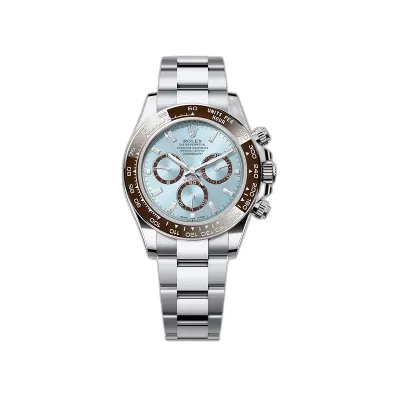
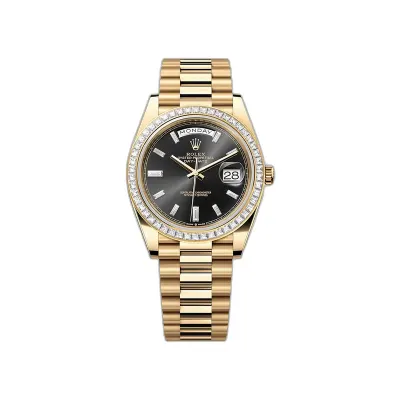
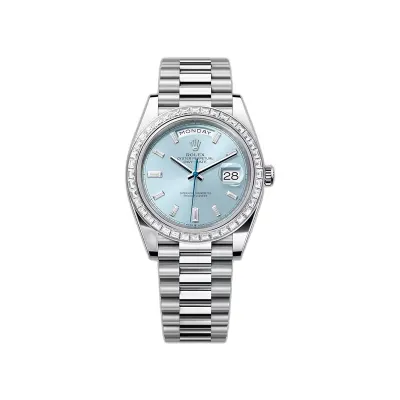
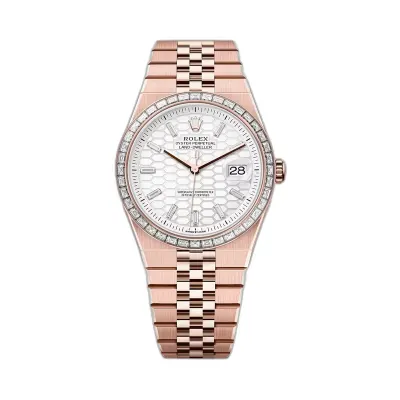
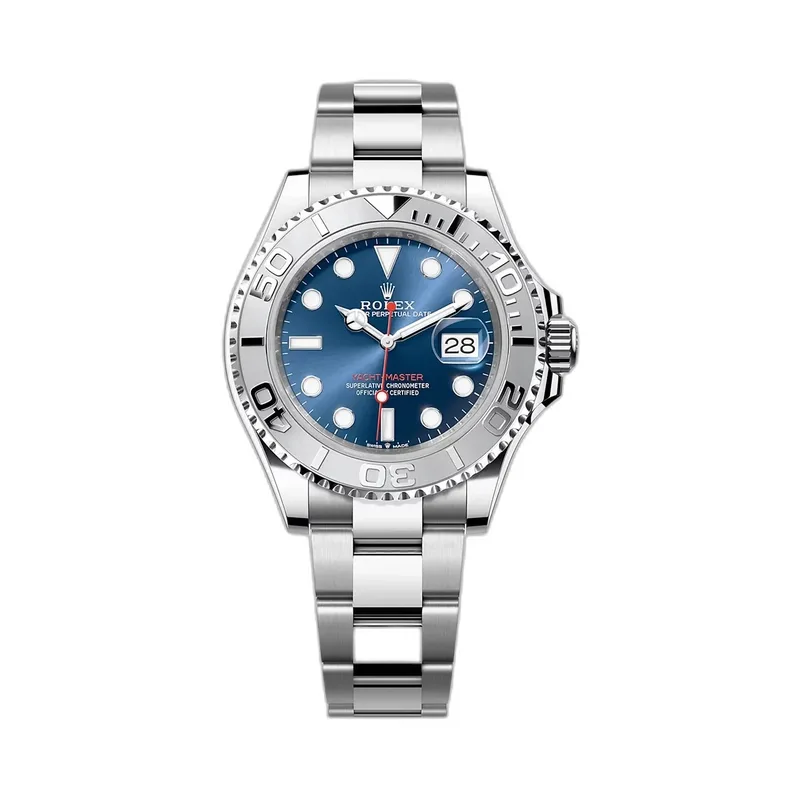
Rolex was born in London in 1905, when Hans Wilsdorf and Alfred Davis founded Wilsdorf & Davis, and it has been headquartered in Geneva since 1919. Two of its inventions shaped everything it has made since: the waterproof Oyster case of 1926 and the Perpetual self-winding rotor of 1931. It is owned by the Hans Wilsdorf Foundation. Our catalogue of Rolex watches includes the Daytona, Datejust, Day-Date, Submariner, GMT-Master II, Sky-Dweller and Yacht-Master, among others.
Tudor
Tudor came from the same founder. In 1926 the Geneva firm Veuve de Philippe Hüther registered “The Tudor” trademark for Hans Wilsdorf, and in 1946 Wilsdorf founded Montres Tudor SA. For decades it used movements from other makers; since the mid-2010s it has fitted manufacture calibres, the first of them in the North Flag. Since 2023 it has assembled and tested its watches in Le Locle. Its main collections are the Black Bay, Pelagos, 1926 and Tudor Royal, and the Tudor watches in our catalogue include pieces from all of them. Our Tudor Black Bay guide covers the brand in depth.
The holy trinity of watchmaking: Patek Philippe, Audemars Piguet and Vacheron Constantin
Collectors call these three houses the “holy trinity”. It is not anyone’s official classification but a nickname which, as Quill & Pad explains, rests on their technical record and their uninterrupted activity.
Patek Philippe
Antoine Norbert de Patek founded Patek, Czapek & Co. in Geneva in 1839, together with Franciszek Czapek. In 1844, at the Industrial Exposition in Paris, he met the watchmaker Adrien Philippe, and in 1851 the firm became Patek, Philippe & Cie. In 1932 it was bought by Charles and Jean Stern, owners of a dial-making business that had been one of its suppliers, and the Stern family has run it for four generations. The brand describes itself as the last independent, family-owned Genevan watch manufacture. The Patek Philippe watches in our catalogue include the Nautilus, Aquanaut, Calatrava, Complications and Grand Complications, and the Nautilus has a page of its own: the Patek Philippe Nautilus collection.
Audemars Piguet
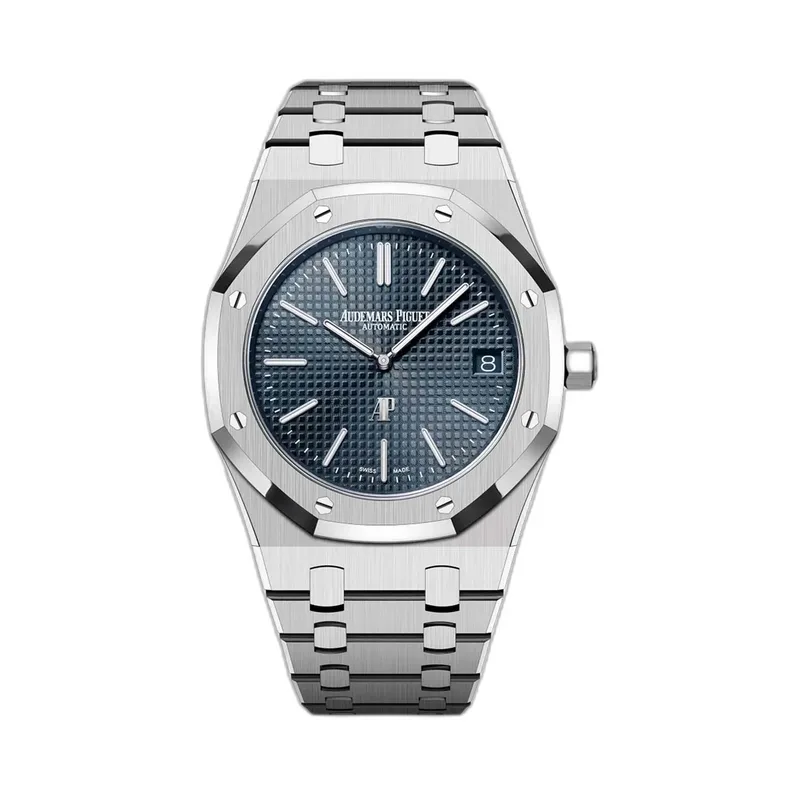
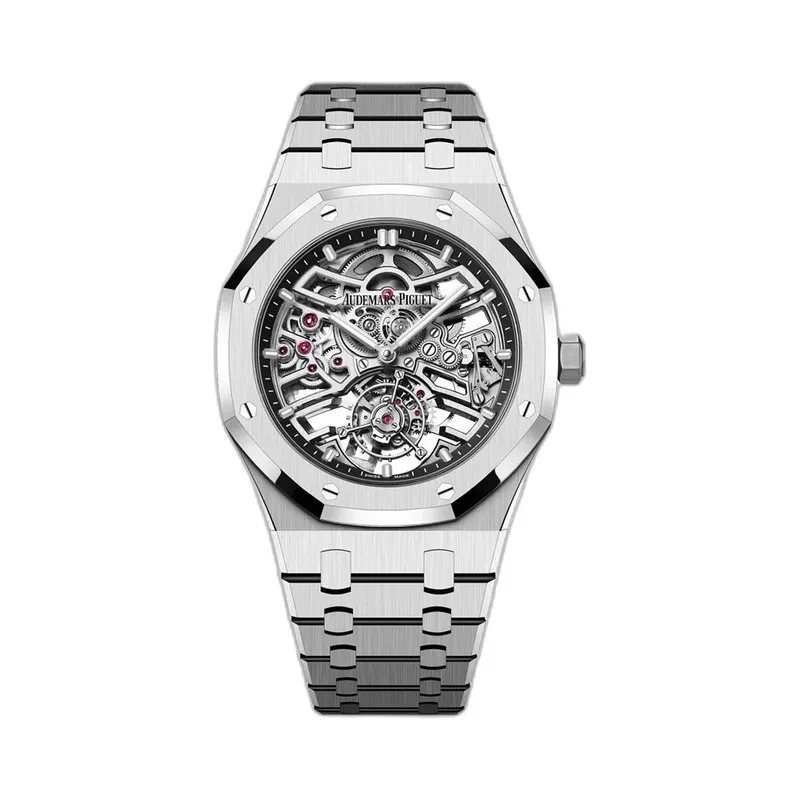
Jules Louis Audemars and Edward Auguste Piguet founded the house in 1875 in Le Brassus, in the Vallée de Joux, where it remains. It is independent, and the brand describes itself as the oldest watchmaking manufacturer still in the hands of its founding families. Its best-known model, the Royal Oak, was officially launched on 15 April 1972, designed by Gérald Genta. The Audemars Piguet watches in our catalogue include the Royal Oak, Royal Oak Offshore and Code 11.59, and the Audemars Piguet Royal Oak collection brings together its best-known model.
Vacheron Constantin
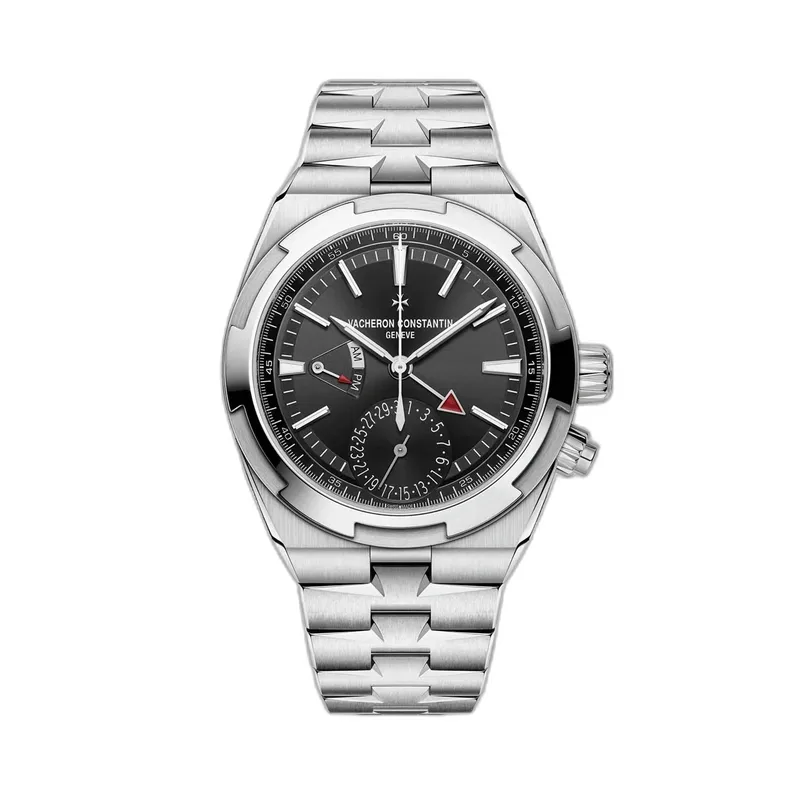
Vacheron Constantin dates its origins to Geneva in 1755, the year Jean-Marc Vacheron signed the contract of his first apprentice, a document dated 17 September that survives in the archives of the State of Geneva. The brand presents itself as the world’s longest-standing watch manufacture in continuous production; it is the brand’s own claim, repeated by Richemont, the group that owns it. The Vacheron Constantin watches in our catalogue include pieces from the Overseas, like the one pictured, the Traditionnelle, Historiques, Fiftysix and Égérie.
Other Swiss manufactures
Jaeger-LeCoultre
Founded in 1833 in Le Sentier, in the Vallée de Joux. It belongs to Richemont, which quotes two of the brand’s figures: more than 1,400 calibres and more than 430 patents over its history. Its best-known model, the Reverso, was born in 1931 out of a challenge from British officers playing polo in India: a watch that could survive the game, with a case that turns right over in its frame. Since the 1930s it has also made the Atmos, a table clock powered by changes in temperature, based on an invention by Jean-Léon Reutter. The Jaeger-LeCoultre watches in our catalogue include the Reverso, Master Ultra Thin and Rendez-Vous.
IWC Schaffhausen
It was founded in Schaffhausen in 1868 by an American watchmaker, Florentine Ariosto Jones, with an unusual plan: to make high-quality pocket watch movements in Switzerland, with Swiss craftsmen and modern machinery, for the US market. It belongs to Richemont. The IWC watches in our catalogue include pieces from the Pilot and Portugieser lines.
Omega
Louis Brandt opened a small workshop in La Chaux-de-Fonds in 1848, at the age of 23. His sons later joined the business, which is now based in Biel/Bienne, and in 1894 they named a new calibre Omega; it was such a success that the name was eventually given to the whole house. It belongs to the Swatch Group. Its best-known chapter is in space: the Speedmaster Professional was part of every Apollo 11 astronaut’s kit in 1969, and it has been called the Moonwatch ever since. The Omega watches in our catalogue include the Seamaster and De Ville.
Longines
In 1832 Auguste Agassiz joined forces with other watchmakers to open a workshop in Saint-Imier, in the Swiss Jura. In 1889 the Longines name and its winged hourglass were presented to the new federal intellectual property office, and the brand states that it is the oldest watch brand trademarked in the WIPO international register. It belongs to the Swatch Group. The Longines watches in our catalogue include the Conquest, Spirit and La Grande Classique.
TAG Heuer
Edouard Heuer founded his workshop in Saint-Imier in 1860, at the age of 20. In 1985 the Techniques d’Avant-Garde (TAG) group bought Heuer, hence the current name. Today it belongs to LVMH. Its best-known collections grew out of motor racing: the Carrera of 1963 and the Monaco of 1969, which the brand describes as the first waterproof square-cased chronograph. The Autavia, whose name combines automobile and aviation, dates from 1933. The TAG Heuer watches in our catalogue include the Aquaracer, Autavia, Carrera and Formula 1.
Panerai
Founded in Florence in 1860, when Giovanni Panerai opened his watch shop. The house supplied precision instruments to the Italian Navy, and its watches were not sold to the public until 1993. Today it belongs to Richemont and manufactures in Neuchâtel. Its two main names, Radiomir and Luminor, were originally those of two luminous compounds developed by the house, the second replacing the first. The Panerai watches in our catalogue include a Radiomir.
Hublot
Founded in 1980 by Carlo Crocco, who paired precious metals with a rubber strap from the outset. That mix of materials is the idea behind the brand’s slogan, “the art of fusion”. It belongs to LVMH and manufactures in Nyon, where it opened its premises in 2009. Its flagship collection is the Big Bang, and the Hublot watches in our catalogue include the Big Bang and Classic Fusion.
Roger Dubuis
One of the youngest houses in this guide, founded in Geneva in 1995. It belongs to Richemont and manufactures in Geneva, in an integrated manufacture where it builds its own calibres. Richemont highlights that its watches carry the Poinçon de Genève, the Geneva Seal, a quality hallmark with manufacturing and finishing requirements. Its main collection is the Excalibur, which is what we have among the Roger Dubuis watches in our catalogue.
German watch brands: A. Lange & Söhne and Glashütte Original
A. Lange & Söhne
Ferdinand Adolph Lange founded the house in 1845 in Glashütte, Saxony. The brand was re-founded in 1990: Walter Lange registered the new company on 7 December that year, shortly after German reunification. On 24 October 1994 it presented its first collection at the Dresden Residenzschloss: the Lange 1, Arkade, Saxonia and the Tourbillon “Pour le Mérite”. It belongs to Richemont. The A. Lange & Söhne watches in our catalogue include the Lange 1, Saxonia and Zeitwerk.
Glashütte Original
It shares a town and roots with Lange: the brand itself traces its origins back to 1845. In 1951 all the Glashütte watch companies were merged into one, and in 1990 the company that would become today’s brand was registered. It has belonged to the Swatch Group since 2000. Its collections are the Senator, Pano, Spezialist, Vintage and Serenade; the Pano line is recognisable by its asymmetric dial. The Glashütte Original watches in our catalogue include a Pano.
Jewellers and luxury houses with their own watchmaking
Cartier
In 1847 Louis-François Cartier took over the jewellery workshop of his master, Adolphe Picard, on the rue Montorgueil in Paris. In watchmaking its key date is 1904, when it designed the Santos for the aviator Alberto Santos-Dumont, which Cartier presents as the first watch expressly designed to be worn on the wrist; it went on sale in 1911. The Tank was designed in 1917 and sold from 1919. It belongs to Richemont. The Cartier watches in our catalogue include the Santos, the Tank and pieces from the Privé collection.
Bulgari
Founded in Rome in 1884 as a jeweller by Sotirio Bulgari. It has belonged to LVMH since 2011 and makes its watches in Switzerland, in Neuchâtel, Le Sentier and Saignelégier. Over the past decade its watchmaking has become known for the ultra-thin Octo Finissimo collection, which has set a string of thinness records since 2014; the 2024 Octo Finissimo Ultra COSC measures 1.70 mm thick. The Bulgari watches in our catalogue include a Bvlgari Bvlgari.
Chopard
Louis-Ulysse Chopard founded his workshop in Sonvilier, in the Jura, in 1860, at the age of 24. The house moved to Geneva in 1937 and in 1963 was bought by Karl Scheufele; it is still family-owned. In 1976 it presented the Happy Diamonds, with diamonds moving freely across the dial, and in 1996 it founded its movement manufacture in Fleurier. It has partnered the Mille Miglia classic car race since 1988. The Chopard watches in our catalogue include the Happy Sport and L.U.C.
Piaget
Georges Édouard Piaget opened his first workshop in 1874 on the family farm in La Côte-aux-Fées, at the age of 19. The house specialised in ultra-thin movements: in 1957 it presented calibre 9P, hand-wound and about 2 mm thick, and in 1960 the automatic 12P, at about 2.3 mm. That line continues in the Altiplano. It belongs to Richemont and has had its workshops in Plan-les-Ouates since 2001. Besides the Altiplano, its collections are the Polo, Possession and Limelight. The Piaget watches in our catalogue include the Altiplano, Polo and Limelight Gala.
Montblanc
Montblanc was founded in Germany in 1906 as a maker of writing instruments, and its watchmaking came later. It makes its watches in Switzerland, at the former Minerva manufacture in Villeret, founded in 1858, which Richemont bought in the mid-2000s and turned into Montblanc’s movement centre. It belongs to Richemont. Its 1858 collection takes its name from the year Minerva was founded, and it is the collection we have among the Montblanc watches in our catalogue.
Independents and younger houses
F.P. Journe
The watchmaker François-Paul Journe presented his first collection under his own name in 1999, in Geneva, where his workshops are. His motto, “Invenit et Fecit”, means “invented and made”. According to the brand, the 1991 prototype of its Tourbillon Souverain was the first wristwatch with a remontoir, a mechanism that delivers constant force to the escapement. Journe has also researched resonance, two balances that synchronise with each other, since 1983. It is independent, although Chanel has held a 20% minority stake since 2018. The F.P. Journe watches in our catalogue include pieces from the Classique line and limited series.
Richard Mille
The brand was unveiled in 2001 with the RM 001 Tourbillon, in a first series of 17 pieces, and was born of the partnership between Richard Mille and Dominique Guenat. Members of both families lead it today. It stands out for its light, technical materials: titanium and thin-layer composites such as Carbon TPT, Quartz TPT and Graph TPT. The Richard Mille watches in our catalogue include the RM 07-01, RM 11-03 and RM 65-01 series, among others. Our Richard Mille guide explains how to read its model names.
Jacob & Co
Jacob Arabo started out as a jeweller with a small booth in New York’s diamond district and launched his own label, Jacob & Co, in 1986. His watchmaking has become known for showpiece complications: the Astronomia, which the brand calls a galaxy on the wrist, was developed with Luca Soprana and his studio, Atelier 7h38. Its collections include the Astronomia, Epic X and Opera, alongside a partnership with Bugatti. The Jacob & Co watches in our catalogue include a Bugatti Tourbillon.
Groups: which houses belong to a group and which are independent
Many of the houses in this guide belong to one of three large groups. We checked each group’s website in November 2026; these memberships change from time to time.
| Group | Houses in this guide | Other houses with watches in the group |
|---|---|---|
| Richemont | Vacheron Constantin, Jaeger-LeCoultre, IWC, Panerai, Piaget, Roger Dubuis, A. Lange & Söhne, Cartier and Montblanc | Van Cleef & Arpels |
| Swatch Group | Omega, Longines and Glashütte Original | Breguet, Blancpain, Jaquet Droz, Rado, Tissot, Hamilton and Swatch, among others |
| LVMH | TAG Heuer, Hublot and Bulgari | Zenith, Tiffany & Co. and Chaumet, among others |
| Outside those three groups | Rolex, Tudor, Patek Philippe, Audemars Piguet, Chopard, Richard Mille, F.P. Journe and Jacob & Co | — |
Among those outside any group, several describe themselves as family-owned: Patek Philippe, owned by the Stern family since 1932; Audemars Piguet, by its founding families; Chopard, by the Scheufele family since 1963; and Richard Mille, led by the Mille and Guenat families. F.P. Journe is independent, with a minority stake held by Chanel. Rolex and Tudor are sister companies, both owned by the Hans Wilsdorf Foundation.
How to choose between brands without rankings
Asking which is the best watch brand does not lead to a useful answer. It is more practical to start with the watch and leave the brand until last:
- Use. A watch for every day, for the water or for particular occasions points to different collections within the same house: a Submariner is not a Day-Date, nor an Aquanaut a Calatrava.
- Size. Diameter, thickness and lug-to-lug length matter more on the wrist than the name on the dial.
- Movement. Automatic, hand-wound or quartz; each asks for different care. Our guide to automatic, manual and quartz watches explains the differences.
- Complications. A chronograph, GMT, annual calendar or tourbillon changes how the watch is used and maintained. They are all in our watch complications glossary.
- House style. This is where the brand comes in: the restraint of a Calatrava, the octagonal bezel of a Royal Oak, the tonneau of a Richard Mille or the asymmetric dial of a Pano.
Every watch in our catalogue is priced on request and available to order, and you can ask us for photos of any of them. If you are looking for a model from one of these houses that is not listed, you can ask for it through our Request a model page.
Frequently asked questions
What is the holy trinity of watchmaking?
It is a collectors’ nickname, not an official classification, for Patek Philippe, Audemars Piguet and Vacheron Constantin. It rests on the three houses’ technical record and on their uninterrupted activity since the 18th or 19th century: Vacheron Constantin since 1755, Patek Philippe since 1839 and Audemars Piguet since 1875. All three are Swiss; two remain independent and family-owned, while Vacheron Constantin belongs to Richemont.
What does “Swiss made” mean?
It is an indication of origin regulated by a Swiss ordinance. Since 2017, a watch may only carry it if its movement is Swiss, it is cased in Switzerland, the manufacturer carries out the final inspection in Switzerland and at least 60% of its manufacturing costs are generated in Switzerland. Since 2019, technical development must also take place in Switzerland. The movement has its own requirements for origin and cost.
What is a manufacture?
In watchmaking, a manufacture is a house that designs and makes its own movements, and sometimes most of its components, as opposed to one that assembles movements or parts from other makers. It is not a legal category, and each brand uses the word with more or less rigour. Many houses in this guide make their own calibres, including Patek Philippe, Audemars Piguet, Jaeger-LeCoultre, Roger Dubuis and F.P. Journe.
What is the oldest watch brand?
It depends on what you count. Blancpain, which is not in our catalogue, traces its origins to 1735, when its founder registered as a watchmaker in Villeret. Vacheron Constantin, from 1755, presents itself as the manufacture with the longest continuous production. Breguet opened its workshop in Paris in 1775. And Longines claims to be the oldest watch brand in the WIPO international register. Each of these claims is the house’s own.
Are Tudor and Rolex the same brand?
No. They share a founder, Hans Wilsdorf, who registered the Tudor trademark in 1926 and founded Montres Tudor SA in 1946, and both are now owned by the Hans Wilsdorf Foundation. But they are separate houses with their own collections and calibres, and Tudor assembles its watches in Le Locle. We go into detail in our Tudor Black Bay guide.
Which brands are in your catalogue?
At present, the 23 in this guide: Rolex, Patek Philippe, Audemars Piguet, Richard Mille, Jacob & Co, Tudor, Hublot, Roger Dubuis, TAG Heuer, Vacheron Constantin, Cartier, Jaeger-LeCoultre, Piaget, A. Lange & Söhne, Chopard, IWC, Longines, Omega, F.P. Journe, Bulgari, Glashütte Original, Montblanc and Panerai. Our catalogue changes, so the up-to-date list is on our brands page.
Sources
- Worldtempus, Fondation de la Haute Horlogerie: a definition of fine watchmaking (opens in a new window)
- Swiss ordinance on the use of the name “Swiss” for watches (SR 232.119), text on WIPO Lex (opens in a new window)
- Swiss Federal Institute of Intellectual Property, revision of the “Swiss” ordinance for watches (opens in a new window)
- Quill & Pad, Grail Watches: The Holy Trinity (opens in a new window)
- Wikipedia, Rolex (opens in a new window)
- Wikipedia, Tudor Watches (opens in a new window)
- Worn & Wound, Tudor Opens the Doors of the New Manufacture (2023) (opens in a new window)
- Patek Philippe, The founders (opens in a new window)
- Patek Philippe, The Stern family (opens in a new window)
- Audemars Piguet, About the manufacture (opens in a new window)
- AP Chronicles, The epic AP saga (founders) (opens in a new window)
- AP Chronicles, Birth of an icon (Royal Oak) (opens in a new window)
- Worldtempus, Who Knew It? Stories From Vacheron Constantin's Early Years (opens in a new window)
- Richemont, Our Maisons (opens in a new window)
- Richemont, Vacheron Constantin (opens in a new window)
- Richemont, Jaeger-LeCoultre (opens in a new window)
- Richemont, Roger Dubuis (opens in a new window)
- Jaeger-LeCoultre, The genesis of Reverso (opens in a new window)
- Revolution, From Here To Eternity: The Jaeger-LeCoultre Atmos (opens in a new window)
- IWC Schaffhausen, Timeline (opens in a new window)
- Swatch Group, Brands and companies (opens in a new window)
- LVMH, Watches and jewelry (opens in a new window)
- Wikipedia, Omega SA (opens in a new window)
- Omega, 1848: the first workshop (opens in a new window)
- Omega, 1894: Omega is born (opens in a new window)
- Omega, 1969: the first journey to the Moon (opens in a new window)
- Longines, history: 1832 (opens in a new window)
- TAG Heuer Magazine, A history written in seconds (opens in a new window)
- Wikipedia, Panerai (opens in a new window)
- Worldtempus, 40 years of Hublot: five milestones (opens in a new window)
- A. Lange & Söhne, Always looking ahead (opens in a new window)
- Glashütte Original, History (opens in a new window)
- Cartier, Timeline (opens in a new window)
- Worldtempus, Bulgari (opens in a new window)
- Monochrome, the 1.70 mm Bulgari Octo Finissimo Ultra COSC (opens in a new window)
- Chopard, Our identity (opens in a new window)
- Piaget, History (opens in a new window)
- Worldtempus, Minerva, the History of the Montblanc Gem (opens in a new window)
- F.P. Journe, Invenit et Fecit (opens in a new window)
- Monochrome, Chanel takes a 20% minority stake in Montres Journe SA (opens in a new window)
- Richard Mille, History (opens in a new window)
- Swisswatches Magazine, 25 years of Richard Mille (opens in a new window)
- Jacob & Co, About (opens in a new window)
- Blancpain, History (opens in a new window)
- Breguet, 1775: the opening of Abraham-Louis Breguet's workshop in Paris (opens in a new window)