New or Pre-Owned Luxury Watch: What to Check
What to check before buying a new or pre-owned luxury watch: reference, condition, paperwork, guarantees and the questions worth asking the seller.
Before buying a luxury watch, new or pre-owned, there are five things worth checking: the exact reference, the real condition of the watch, the paperwork that comes with it, the guarantee it carries and who stands behind that guarantee. With a new watch almost all of this is a given. With a pre-owned one you have to ask, and this guide tells you what to ask.
New, unworn and pre-owned: what each term means
These three words are used a great deal and do not always mean the same thing.
New is a watch that has not been worn. With brands such as Rolex, the guarantee card is filled in and dated when the watch is first sold within the brand’s network of official retailers.
Unworn has no single definition. Each seller applies it in their own way, so ask what it means for that particular watch: whether it has ever been worn, whether the guarantee card is already dated and what the date is.
Pre-owned or second-hand is a watch that has already had an owner. It may be almost untouched or show years of wear, which is why condition is described watch by watch.
How we show it on each watch page
Every watch in our catalogue carries one of two labels: New or Pre-owned. The page also shows the reference, the model’s specifications and, if the watch includes it, the certificate with its date. You can filter all watches by condition.
First, the exact reference
The reference is the code that identifies the model and its configuration: material, bezel, dial and bracelet. Two watches that look the same in a photo can be different references, in another metal or with a movement from another generation.
Always ask for the full reference, with its suffix, and compare it with the brand’s product page. If the dial, bezel or bracelet does not match what the brand lists under that reference, ask why. We explain how each code is decoded in our guide on how to read watch reference numbers.
Box and papers: what comes with a watch
Guarantee card or certificate of origin
A new watch comes with a document that identifies it and serves as its guarantee. At Rolex it is the guarantee card, which the retailer fills in and dates at the time of sale. At Patek Philippe it is the Certificate of Origin, which records the movement, case and reference numbers. Patek warns that it must be kept safe, because no copies are issued.
That document carries a number linking it to one specific watch. What you need to check is that it matches the number on the watch and that the date makes sense with what you are being told about the piece.
Box and accessories: what a “full set” is
In the pre-owned market, a full set, or a watch with box and papers, is one that still has everything it originally came with: the box, the card or certificate, the booklets and the hang tag.
It helps to reconstruct the watch’s history, but it has limits. Papers cannot be added later, unless they are forged. Boxes can: those from the same period are almost identical and can be replaced. And neither the box nor the papers proves that a watch is genuine, because they are easier to copy than the watch itself.
Patek Philippe: the Extract from the Archives
The Extract from the Archives is a document that Patek Philippe issues on request. The brand defines it as a partial transcript of what is recorded about that watch in its archives, which it has kept since 1839. It can only be requested once more than ten years have passed since the first sale, and the manufacture asks for photographs of the watch to check that it corresponds to what is on record.
It is not the guarantee document. That role belongs to the Certificate of Origin.
Guarantees: the brand’s and the legal one
A watch can be covered by two different guarantees, which do not exclude each other: the one offered by the manufacturer and the one the law imposes on the seller.
The manufacturer’s international guarantee and its conditions
Take Rolex as the example, because it publishes its conditions in detail. The brand gives a five-year international guarantee on new watches bought from one of its official retailers, which are the shops it has an agreement with to sell its watches. Three conditions must be met for it to apply: the watch was sold by one of those retailers, the card was fully completed at the sale, and the card is presented together with the watch.
Normal wear, loss, theft and damage from misuse are excluded. And the guarantee is lost if parts not made by Rolex are fitted or if anyone outside its network works on the watch.
Two practical consequences follow for a watch you do not buy within that network. First, the card carries the date of that first sale, not the date of your purchase. Second, it is worth confirming with the seller what cover the watch still has.
The legal guarantee in Spain for new and pre-owned goods
When a consumer buys from a professional seller in Spain, consumer law (the consolidated text approved by Royal Legislative Decree 1/2007) makes the seller liable for any lack of conformity that exists at the time of delivery and becomes apparent within the following three years (article 120). For second-hand goods, seller and buyer may agree a shorter period, which can never be less than one year.
Unless proven otherwise, faults that appear within two years of delivery are presumed to have existed at that time (article 121). For second-hand goods, that presumption period can also be shortened by agreement, but not below the liability period that has been agreed. Any guarantee offered by a brand or a shop is added to these rights and does not replace them.
This is an informative summary, not legal advice. The text in force is published in the BOE, Spain’s state gazette, and it is worth asking in writing which period applies to your purchase.
The brands’ own pre-owned programmes
Some brands run their own second-hand programme. Rolex’s is called Rolex Certified Pre-Owned. It covers the brand’s watches that are at least two years old, they are sold by the official retailers that have joined the programme, and they come with the programme’s own seal and card and a new two-year international guarantee from the date of sale.
These are programmes run by the brands and their networks. Crownd&Co is an independent business and is not part of them.
Condition: case, bracelet, crystal and dial
On a worn watch, condition is what varies most from one piece to the next. With the watch in front of you, or with good photos, look at the following:
- Case. Scratches, dents and pitting. Look at the edges: an over-polished case loses the defined angles it had from the factory.
- Bracelet. The play between the links, which increases over the years, and whether all the links are still there.
- Crystal. Chips and scratches.
- Dial and hands. Discolouration and damage to the dial lacquer, which can indicate that water got in at some point.
- Replaced parts. Hands or a bezel insert changed during a service do not rule a watch out, but it is something you need to know before buying.
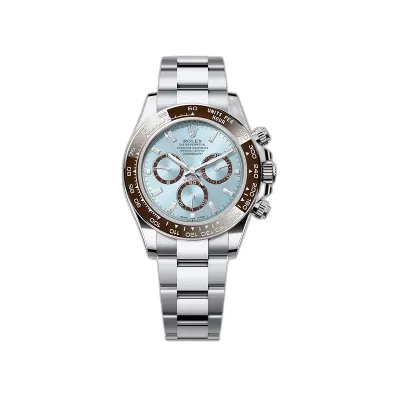
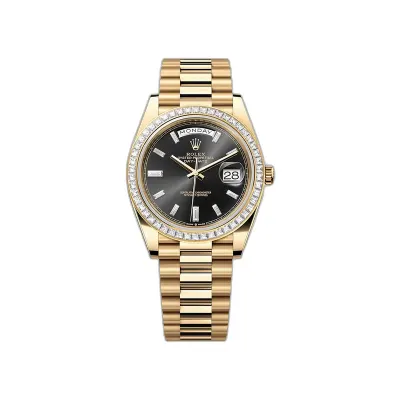
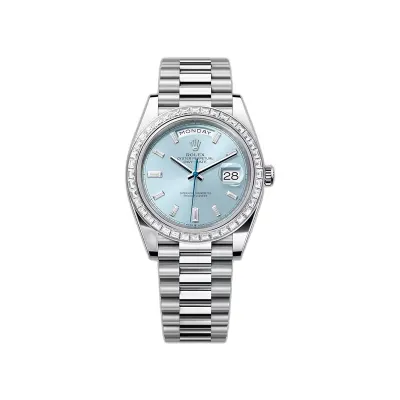
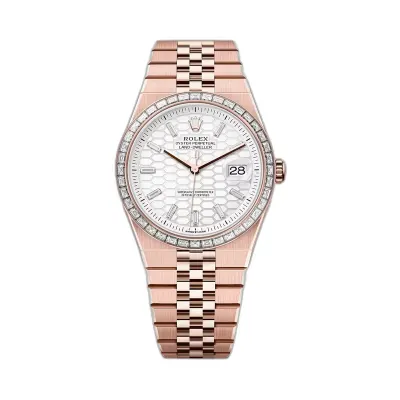
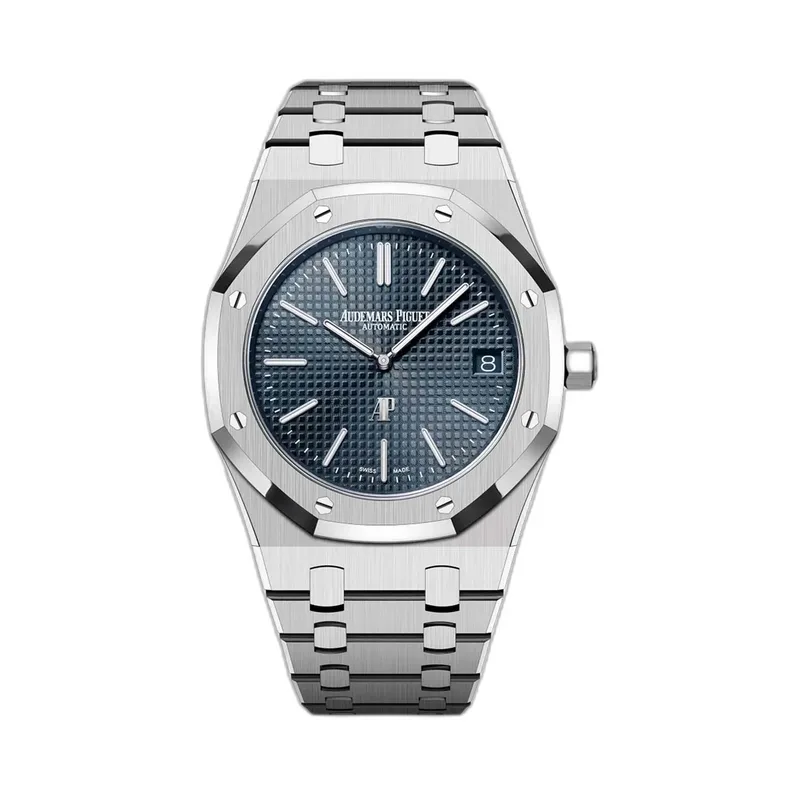
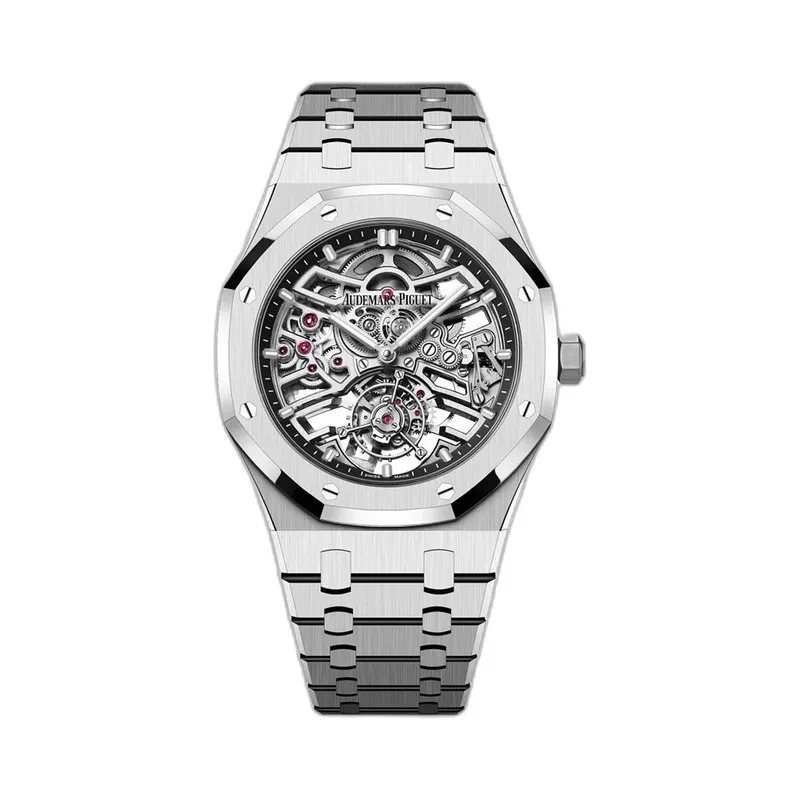
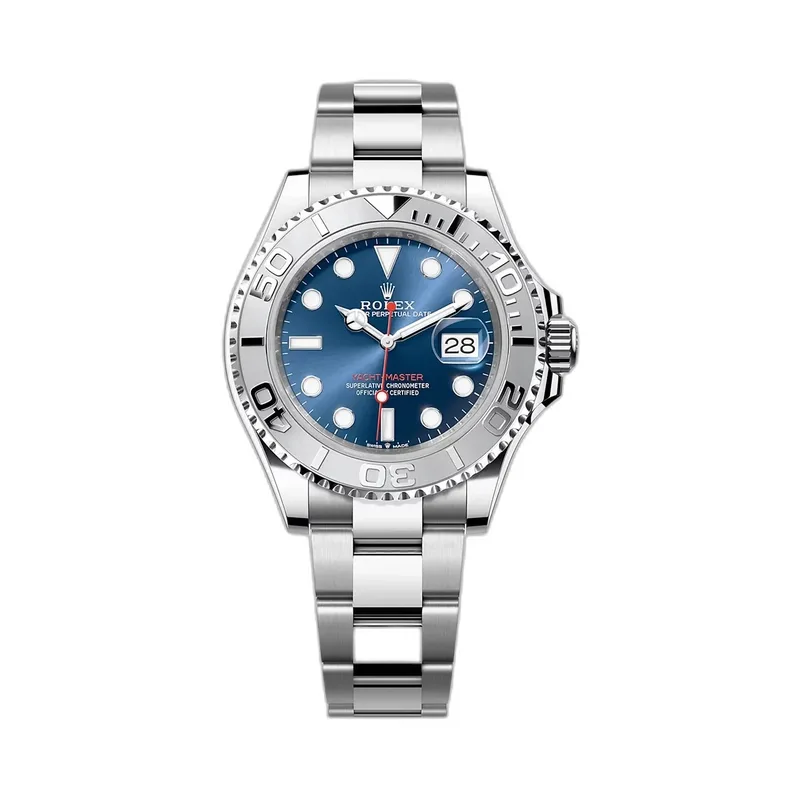
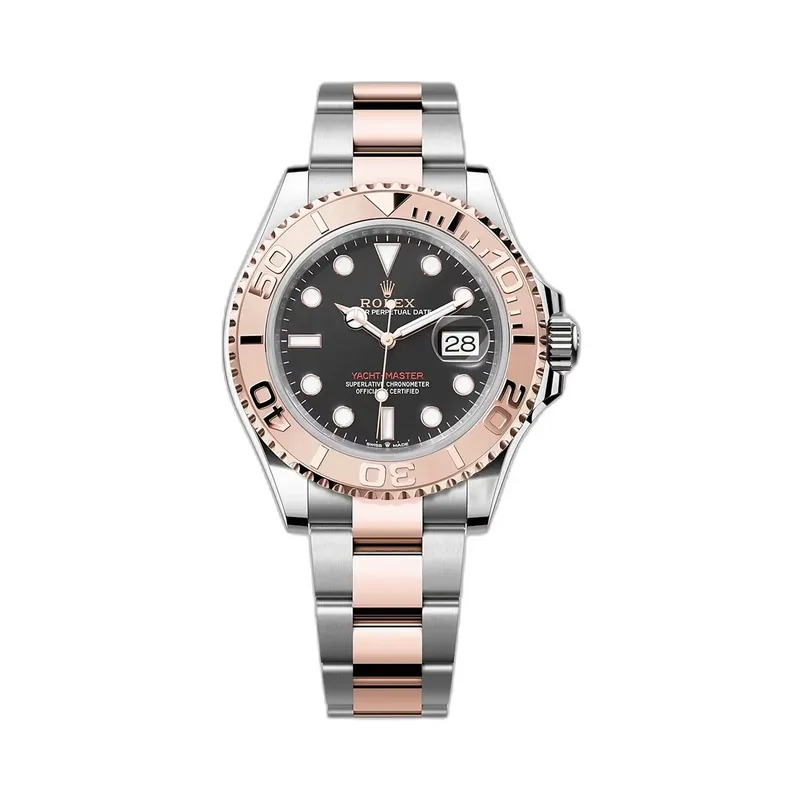
That is why our catalogue images, which are reference images of the model, are not enough to judge a worn watch. Ask for photos of the specific piece.
How to tell if a Rolex is genuine: what you can check yourself
There are checks any buyer can make. They are useful for ruling out inconsistencies, not for certifying anything.
Reference and serial number
On a Rolex, the reference is engraved on the case between the lugs at the 12 o’clock side. The serial number was traditionally between the lugs at the 6 o’clock side. In the mid-2000s the brand began engraving it on the rehaut as well, the inner ring around the dial, and since 2008 it has gradually moved to engraving it there only.
Check three things: that the engraved reference is the one you were told, that the serial number matches the one on the guarantee card, and that the watch’s configuration corresponds to that reference.
Bear the limit in mind: a number can be copied. Everything matching is necessary, but it does not prove authenticity.
What only a watchmaker can confirm
The conclusive evidence is inside. The movement can only be examined with the watch open, and that takes tools, knowledge of the brand and the reference, and the judgement to tell an original part from a replacement.
Two words of caution. At Rolex, any work carried out by someone outside its network voids the brand’s guarantee, so with a piece that still has it, it is worth asking before it is opened. And when a seller says the watch has been checked, ask exactly what was checked: a visual inspection is not the same as an examination with the watch open.
Questions worth asking the seller
- What is the full reference, with its suffix?
- Is the watch new or has it been worn? If it is advertised as unworn, what exactly does that mean?
- Does it include the guarantee card or certificate? What date is on it?
- What guarantee does the watch have, who stands behind it and until when?
- When was the last service, who carried it out and what was replaced? If nobody knows, assume one will be needed.
- Has the case or the bracelet been polished?
- Is any part not the original one?
- Can I see photos of the specific watch, not of the model?
- What are the return conditions?
Ask for the answers in writing. If you are buying locally, our guide to buying luxury watches in Marbella covers what is worth knowing.
How we do it at Crownd&Co
Crownd&Co is an independent business in Marbella offering new and pre-owned watches from brands such as Rolex, Patek Philippe and Audemars Piguet. This is what you will find:
- For each watch, the reference, the condition and, if it is included, the certificate with its date.
- Photos of the specific piece if you ask us for them.
- The guarantee for each watch, which we tell you when we confirm availability.
- Price on request and watches available to order, with personal attention for every enquiry.
The steps are explained in how to buy. And if you are looking for a reference that is not in the catalogue, you can request a model.
Frequently asked questions
Is a new or a pre-owned watch the better choice?
It depends on what you are looking for. A new watch gives you factory condition and, bought within the brand’s network, the manufacturer’s full guarantee. A pre-owned one gives you access to references that are no longer made and calls for more checks: condition, paperwork, service history and guarantee.
Is a watch with box and papers certain to be genuine?
No. The box and papers provide information and help to check that the configuration is the original one, but they can be forged or come from another watch. Confirmation comes from examining the piece itself.
What guarantee does a pre-owned watch have in Spain?
If you buy it from a professional seller, the legal guarantee: three years from delivery, or the shorter period agreed, never less than one year. It may also retain some manufacturer’s guarantee, depending on the date on its card and each brand’s conditions. Ask for both in writing.
Sources
- Rolex, The Rolex Guarantee (opens in a new window)
- Rolex, frequently asked questions (guarantee conditions) (opens in a new window)
- Rolex, Purchasing a Rolex (opens in a new window)
- Rolex, Rolex Certified Pre-Owned (opens in a new window)
- Rolex Newsroom, Rolex Certified Pre-Owned Programme (opens in a new window)
- Patek Philippe, Extract from the Archives: frequently asked questions (opens in a new window)
- BOE, Royal Legislative Decree 1/2007, consolidated text in Spanish (articles 120, 121 and 127) (opens in a new window)
- Fratello, Do The Box And Papers Matter When Buying A Pre-Owned/Vintage Watch? (opens in a new window)
- Fratello, Back To Basics: Tips On How To Buy A Pre-Owned Watch (opens in a new window)
- Gear Patrol, The Secret Language of Watch Enthusiasts, Explained (opens in a new window)
- Monochrome, The ABCs of Time: Fighting Counterfeiting (opens in a new window)
- Fratello, Rolex Serial Numbers and Clasp Codes (opens in a new window)
- Phillips, Rolex Cosmograph Daytona 116520 (catalogue note on the rehaut engraving) (opens in a new window)
- Phillips, Rolex GMT-Master (catalogue note on reference and serial positions) (opens in a new window)